If you walk into a Chinese tea shop and ask for "tea," you'll get a gentle smile and a question: "Which kind?" Because in China, "tea" is not one thing — it's six. Six families, each defined by how the leaves are processed after picking. The same leaf from the same bush can become green tea, black tea, or oolong — the difference is entirely in what happens after it's picked. This guide will help you understand the six families, so you'll never be confused in a tea shop again.
The One Rule That Defines Everything: Oxidation
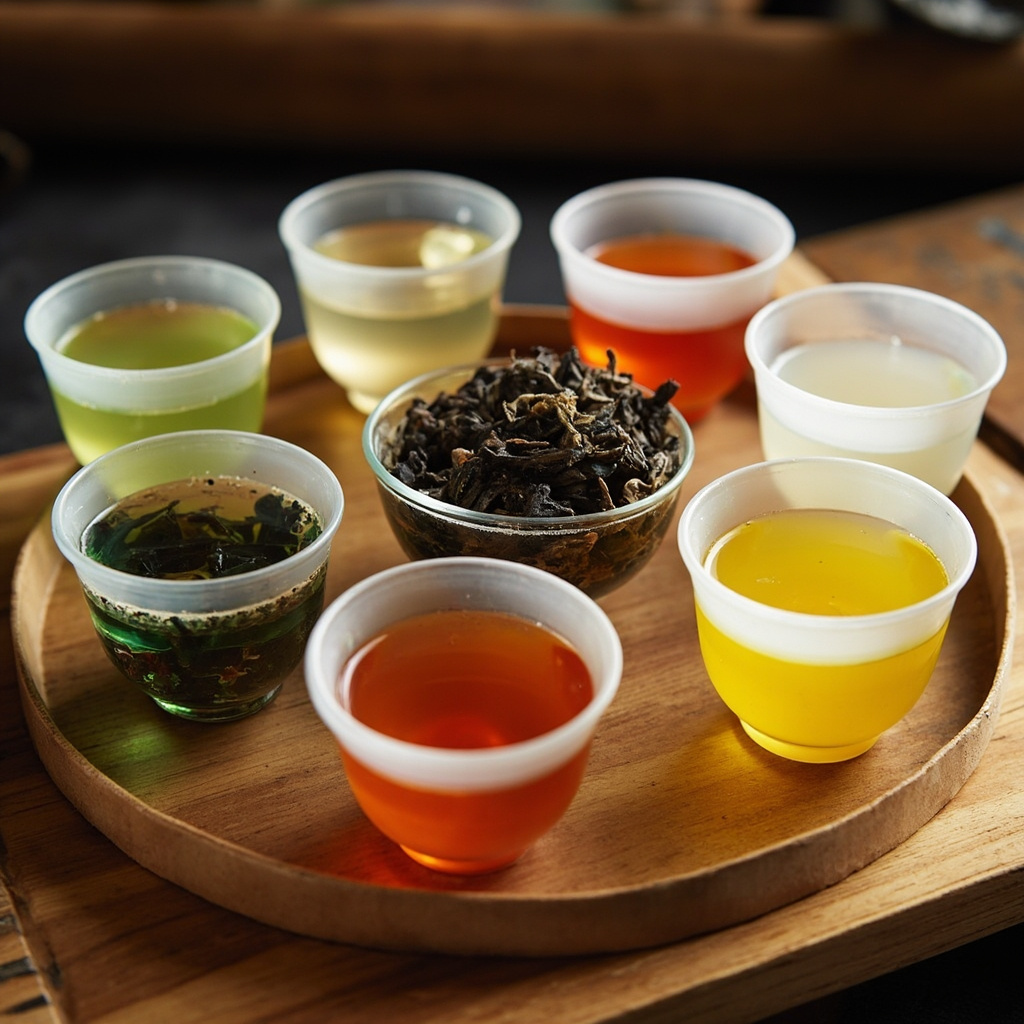
All true tea comes from one plant: Camellia sinensis. The difference between a green tea and a black tea is oxidation — a natural chemical reaction that begins the moment the leaf is picked and its cell walls are broken. Think of it like an apple slice turning brown. Tea makers control this process by applying heat at the right moment to stop oxidation. The six families are defined by how much oxidation is allowed before that heat is applied.
1. Green Tea (绿茶) — Unoxidized
Oxidation: 0%
Process: Picked → immediately heated (pan-fired or steamed) to stop oxidation → rolled → dried.
Flavor: Fresh, vegetal, grassy, sometimes nutty or floral.
Famous examples: Longjing (Dragon Well), Biluochun, Sencha (Japan).
Brewing: The most delicate family. Water at 75–80°C. If the water is too hot, you'll scorch the leaves and get bitterness.
2. Yellow Tea (黄茶) — Slightly Oxidized
Oxidation: 1–5%
Process: Like green tea, but with an extra step called "men huang" (闷黄) — the leaves are wrapped and gently steamed in their own heat, which mellows them.
Flavor: Smoother and sweeter than green tea, no grassy sharpness.
Famous examples: Junshan Yinzhen, Mengding Huangya.
Brewing: 80–85°C. The rarest and least-known family — if you find yellow tea, buy it.
3. White Tea (白茶) — Minimally Processed
Oxidation: 5–10% (natural, not controlled)
Process: Picked → withered → dried. That's it. The least processed of all teas.
Flavor: Delicate, honeyed, hay-like. Ages beautifully — white tea becomes sweeter and darker over years.
Famous examples: Baihao Yinzhen (Silver Needle), Bai Mudan (White Peony), Shou Mei.
Brewing: 80–85°C. Very forgiving — hard to over-steep.
4. Oolong Tea (乌龙茶) — Partially Oxidized
Oxidation: 10–70%
Process: Picked → withered → bruised (leaves are shaken to break cell walls) → partial oxidation → heated to stop → rolled → dried. Sometimes repeated multiple times.
Flavor: The widest range of any family — from floral and light (like Tieguanyin) to dark and roasted (like Dahongpao).
Famous examples: Tieguanyin (Iron Goddess), Dahongpao (Big Red Robe), Dongding, Oriental Beauty.
Brewing: 90–95°C. Oolongs are designed for multiple infusions — the second or third steep is often the best. Use a gaiwan or small teapot.
5. Black Tea (红茶) — Fully Oxidized
Oxidation: 100%
Process: Picked → withered → rolled (to fully break cell walls) → full oxidation → dried.
Flavor: Rich, malty, sometimes chocolaty or fruity. What the West simply calls "black tea."
Famous examples: Keemun, Lapsang Souchong (smoked), Dianhong (Yunnan black), Jin Jun Mei.
Brewing: 95–100°C. The most robust family. Takes milk and sugar well, which is why it became the foundation of British tea culture.
"In Chinese, black tea is called hóng chá (红茶) — literally 'red tea,' named for the color of the liquor, not the leaves. What the Chinese call 'black tea' (黑茶) is something else entirely."
6. Dark Tea / Pu'er (黑茶) — Post-Fermented
Oxidation: Variable, but then fermented by microorganisms.
Process: Picked → heated → rolled → piled and allowed to ferment with beneficial bacteria and fungi (like composting, but controlled) → compressed into cakes or left loose → aged.
Flavor: Earthy, woody, smooth, sometimes with notes of leather, camphor, or dried fruit. Deeply complex.
Famous examples: Pu'er (both raw/sheng and ripe/shou), Liu Bao, Anhua dark tea.
Brewing: 100°C. Pu'er is almost impossible to over-brew. Many people rinse the leaves first with a quick flash of boiling water to "wake them up."
One Leaf, Six Worlds
The same Camellia sinensis leaf, picked on the same morning from the same bush, could become any of these six teas. What changes is not the leaf — it's what the tea maker does with it. Oxidation, heat, rolling, fermentation: these are the four variables. And within each family, there are thousands of variations — different cultivars, different mountains, different seasons, different hands.
This is why tea in China is never just a drink. It's geography, craft, history, and philosophy — all in a cup.