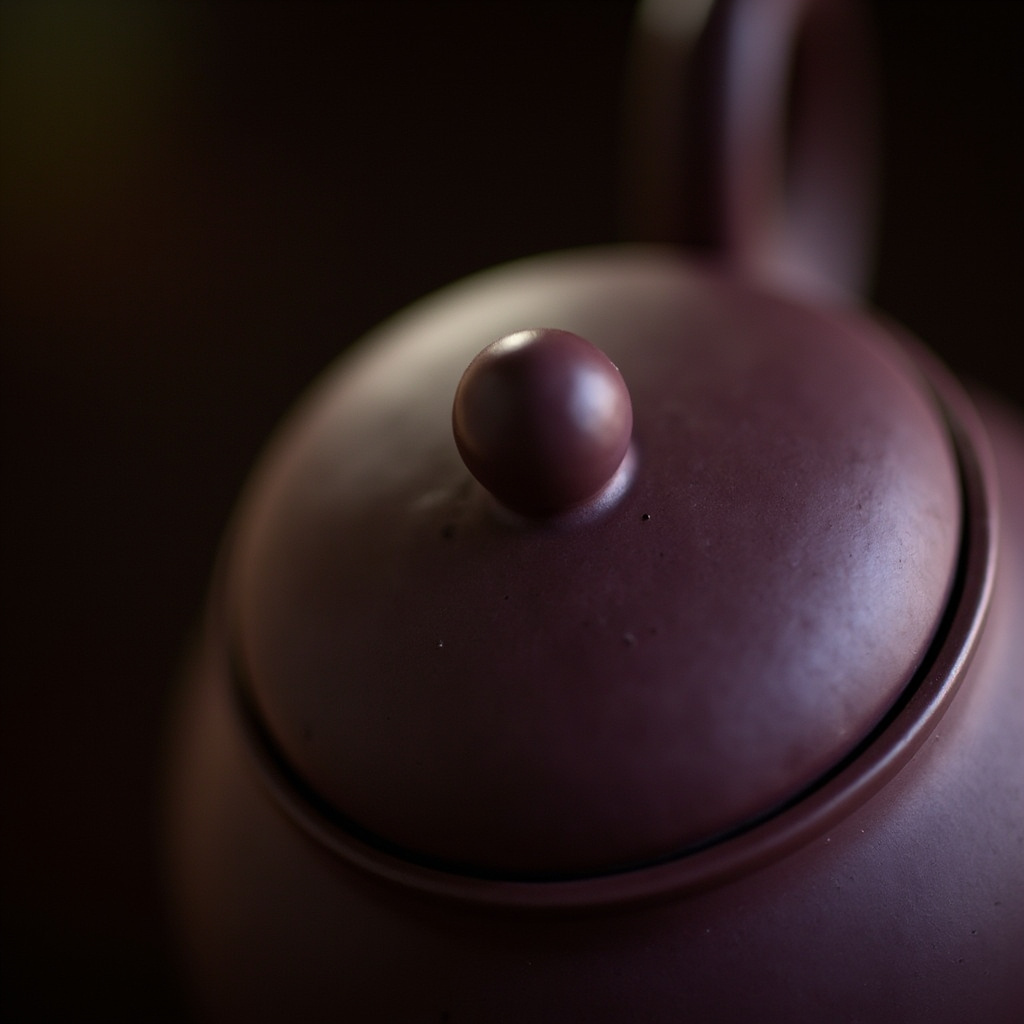
There is a small town in Jiangsu province called Yixing. For five hundred years, its potters have been doing something that seems like alchemy: taking local purple clay, shaping it by hand into teapots, and firing them into objects that tea lovers across China — and now the world — will spend a lifetime collecting. This is Zisha (紫砂), the purple sand pottery that turns brewing tea into a ritual.
Why Clay Matters
Yixing clay is unlike any other pottery clay. It's rich in iron, quartz, and mica, and it's mined from deep beneath the hills around Lake Tai. There are three main varieties: Zini (purple clay), the most common and versatile; Zhuni (cinnabar clay), fine-grained and brilliant red-orange; and Duanni (fortified clay), a blend with a sandy, speckled texture.
What makes Zisha truly special is that it's un-glazed. The clay is fired at around 1100°C, but the surface remains porous. Over time, with repeated use, the teapot absorbs the oils and essences of the tea brewed inside it. This is called yang hu (养壶) — "nurturing the pot." Season a Zisha pot with the same tea long enough, and you can pour hot water into it without any tea leaves and still taste the ghost of a thousand previous infusions.
"A Zisha pot is not bought — it is raised. Like a bonsai tree or a sourdough starter, it becomes yours through the slow accumulation of care."
The Ming Dynasty Origins
Zisha pottery emerged during the Ming dynasty (1368–1644), at exactly the moment when Chinese tea culture was undergoing a revolution. For centuries, tea had been powdered and whisked — the method that gave us Jianzhan bowls. But in the Ming, loose-leaf tea became the standard. You needed a new kind of vessel: one you could steep leaves in, pour from, and hold comfortably in one hand.
The first Zisha master was a monk from Jinsha Temple, though his name has been lost. The first named master was Gong Chun (供春), a servant who studied under the monk and created teapots so beautiful that scholars began collecting them. By the late Ming, a Zisha teapot was a status symbol among the literati — more precious than jade, more personal than porcelain.
One Pot, One Tea
This is the rule Zisha collectors live by: each pot is dedicated to one type of tea. A pot seasoned with Tieguanyin oolong should never touch ripe Pu'er. A pot raised on Dragon Well green tea will have its character forever. Serious collectors own dozens of pots, each with its own tea personality.
The reasoning is both practical and philosophical. The porous clay absorbs flavor, so mixing teas would create confusion. But deeper than that, the relationship between a pot and its tea is seen as a kind of slow friendship — something that deepens over years, that can't be rushed, that rewards patience and consistency.
How to Choose Your First Zisha Pot
Entry-level Zisha pots start around ¥199 ($28) for machine-made pieces. Handmade pots from skilled artisans range from ¥800–5,000 ($110–700). Master-level work can reach into the tens of thousands. For a beginner, here's what to look for:
The lid test: A well-made Zisha lid fits so precisely that if you fill the pot with water, cover the air hole on the lid with your finger, and try to pour — nothing comes out. The seal is that tight.
The pour: Water should flow in a smooth, continuous arc, not drip or sputter. The spout, the air hole, and the handle must be perfectly aligned.
The sound: Tap the body gently with the lid. It should produce a clear, bell-like ring, not a dull thud.
The feel: The clay should feel smooth but not slippery, warm but not cold. Hold it. If it feels right in your hand, it probably is.
"The Zisha pot is the only teapot in the world that gets better with age. A hundred-year-old pot, well cared for, brews better tea than a new one. What other object in your kitchen can make that claim?"